
Range Rover Evoque: Cylinder Head
Removal
NOTES:
Some illustrations may show the engine removed for clarity.
Some variation in the illustrations may occur, but the essential information is always correct.
1. Refer to: Battery Tray (414-01 Battery, Mounting and Cables, Removal and Installation).
2. Refer to: Cooling System Draining, Filling and Bleeding (303-03B Engine Cooling - GTDi 2.0L Petrol, General Procedures).
3. Refer to: Camshafts (303-01B Engine - GTDi 2.0L Petrol, Removal and Installation).
4. Refer to: Intake Manifold (303-01B Engine - GTDi 2.0L Petrol, Removal and Installation).
5.
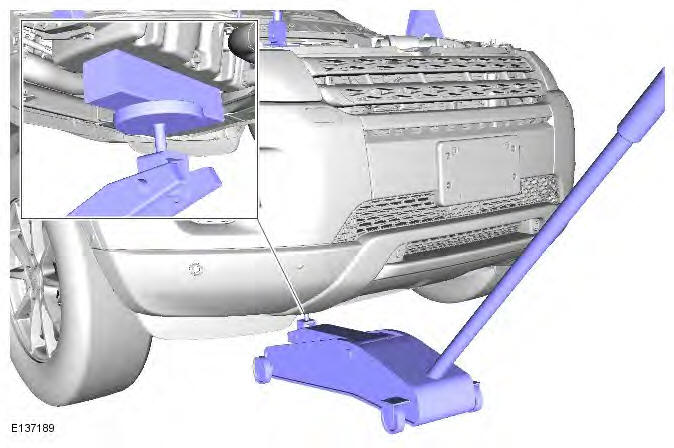
6. Remove the special tool.
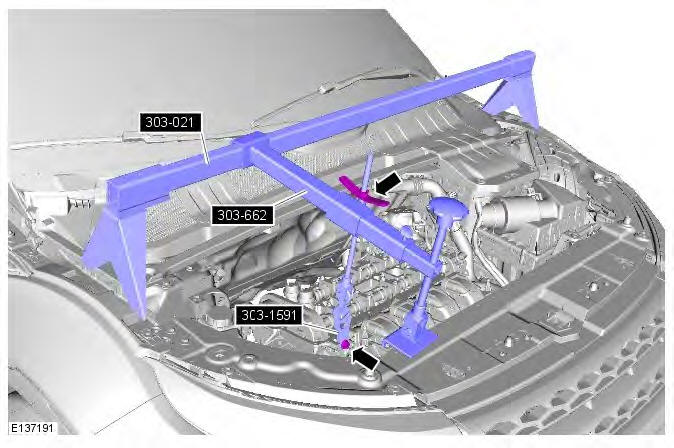
7.
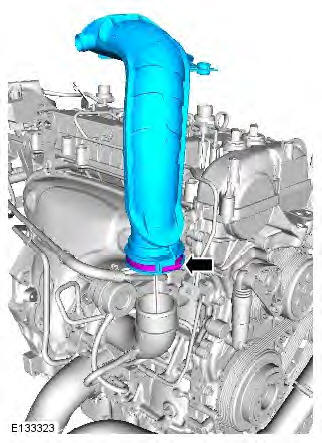
8.
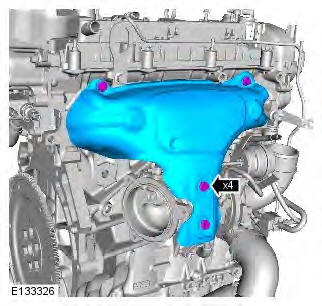
9.
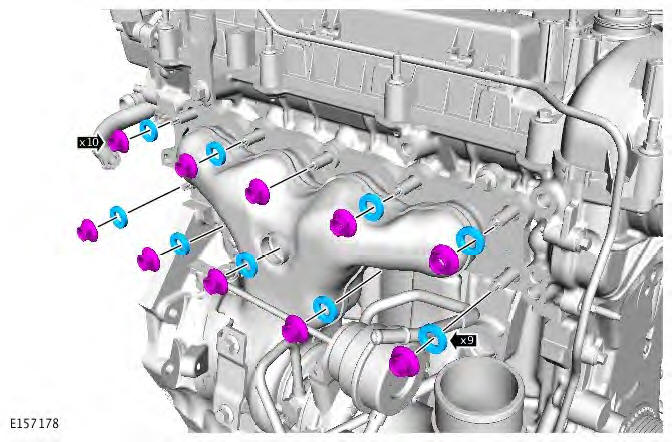
10.
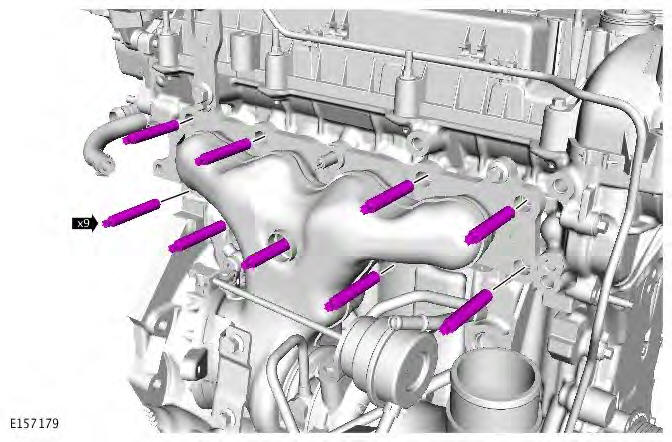
11. CAUTION: Using suitable tie straps, make sure the turbocharger assembly is secure.
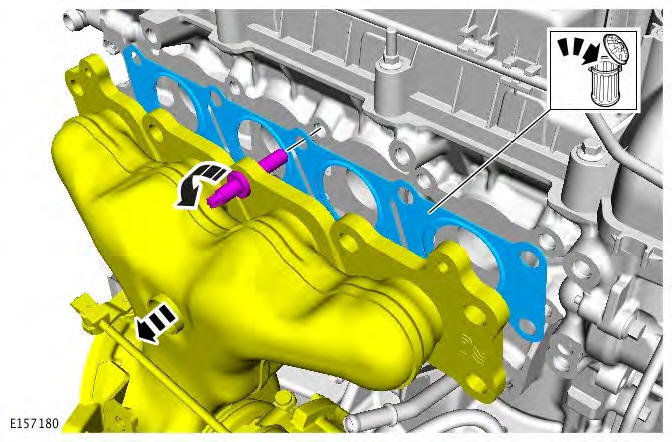
12. CAUTIONS:
Make sure that all openings are sealed. Use new blanking caps.
Be prepared to collect escaping coolant.
- Carefully remove and discard the oil seal.
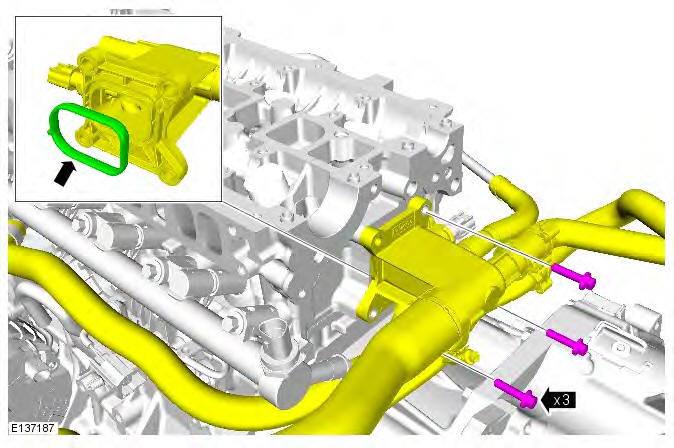
13.
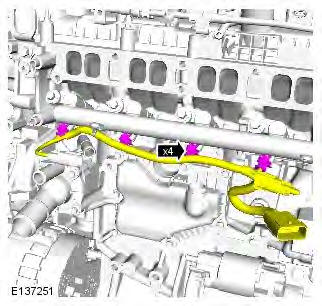
14.
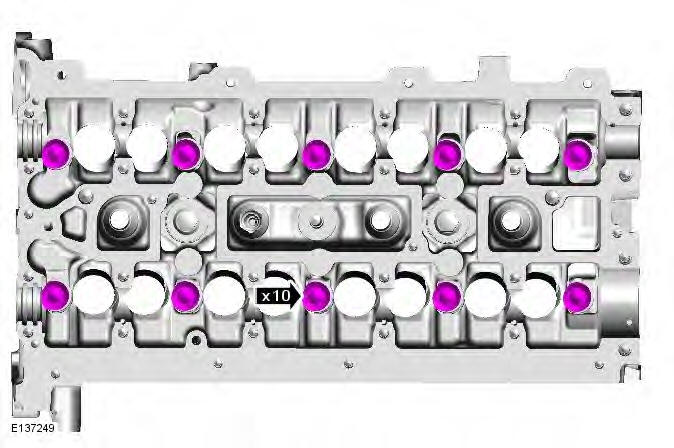
15.
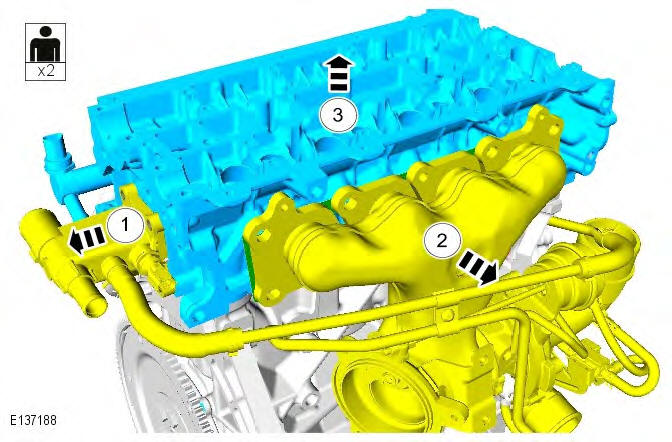
16.
- Remove and discard the cylinder head gasket.
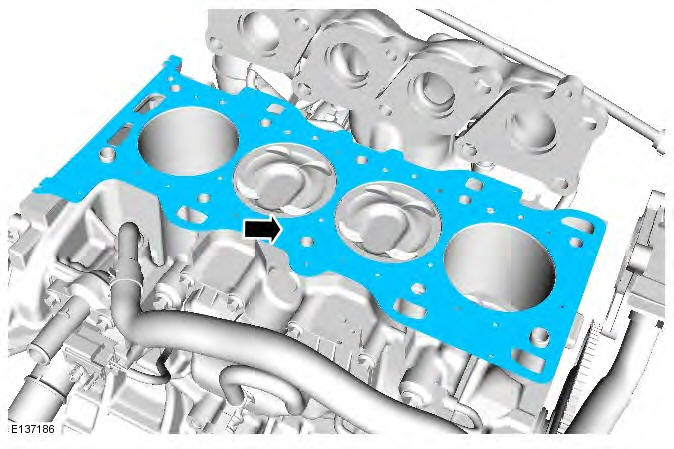
Installation
1.
- Clean the components mating faces.
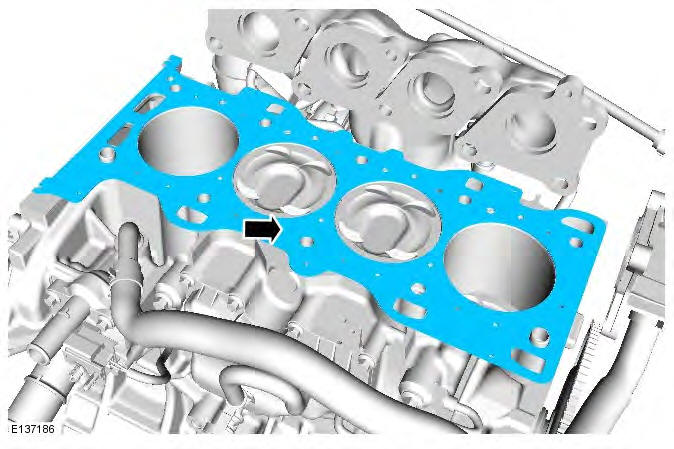
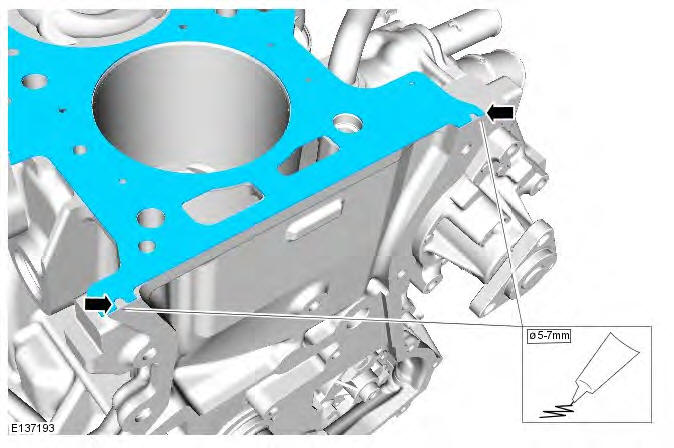
2. CAUTION: Apply sealant WSE-M4G323-A6 in a 5-7mm diameter on both cylinder head gasket notches as shown. The cylinder head and engine front cover must be installed and tightened within 30 minutes of sealant application.
3.
- Clean the component mating faces.
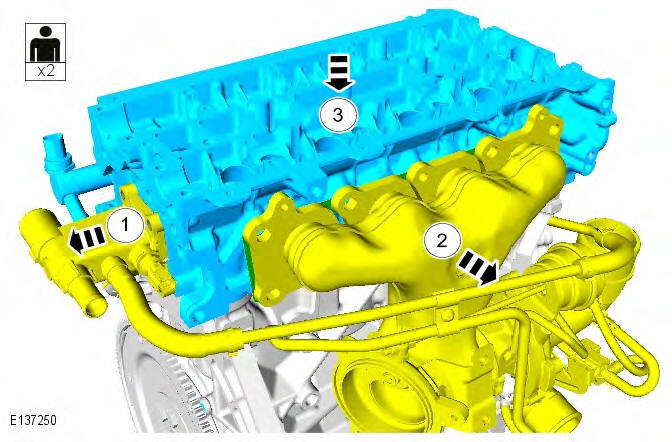
4. CAUTION: Cylinder head bolts may be reused a maximum of two times only.
NOTE: Tighten the bolts in the indicated sequence.
Torque:
- Stage 1: 7 Nm
- Stage 2: 15 Nm
- Stage 3: 55 Nm
- Stage 4: 90
READ NEXT:
Engine Mount LH Removal NOTES: Removal steps in this procedure may contain installation details. Some variation in the illustrations may occur, but the essential information is always correct. 1. Di Engine Mount LH/RH
Removal NOTES: Removal steps in this procedure may contain installation details. Some illustrations may show the engine removed for clarity. 1. WARNING: Make sure to support the vehicle with axle sta Intake Manifold
Removal NOTE: Removal steps in this procedure may contain installation details. 1. WARNING: Make sure to support the vehicle with axle stands. Raise and support the vehicle. 2. Disconnect the battery Oil Cooler
SEE MORE:
The information contained in this handbook covers all vehicle derivatives and optional equipment, some of which may not be fitted to your vehicle. Due to printing cycles, this handbook may include descriptions of options before they become generally available. The vehicle options, hardware an
Important information
Safety warnings indicate either a procedure which must be followed precisely, or information that should be considered with great care, in order to avoid the possibility of personal injury. Cautions indicate either a procedure which must be followed precisely, or information that should
Symbols used in this handbook
